Garment tracking
Every garment,
accounted for.
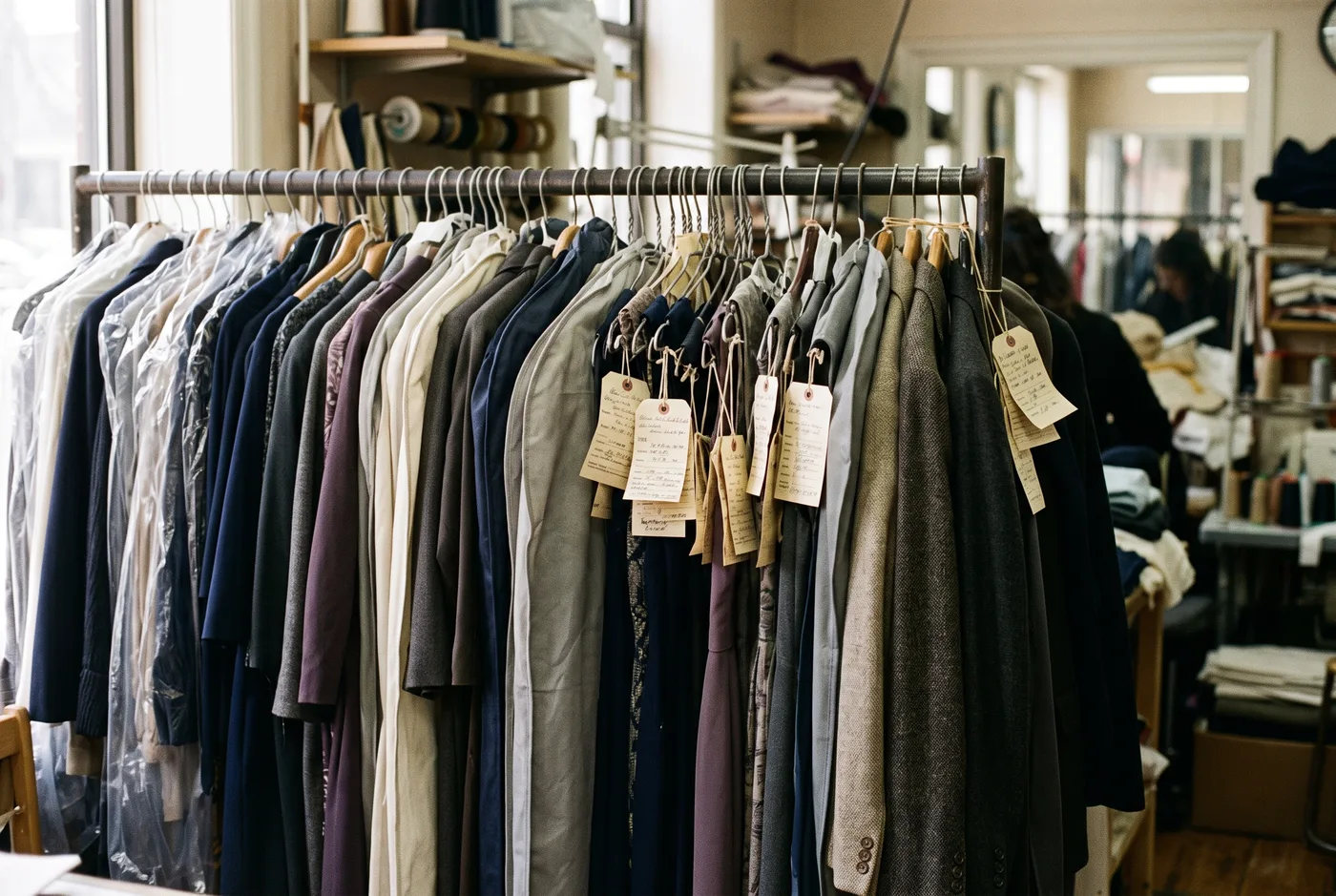
A paper tag can tell you whose jacket this is. It cannot tell you what the customer asked for, what the measurements were, or whether it has been to the seamstress yet. The order record can.
One order record
Everything about the job, on the job.
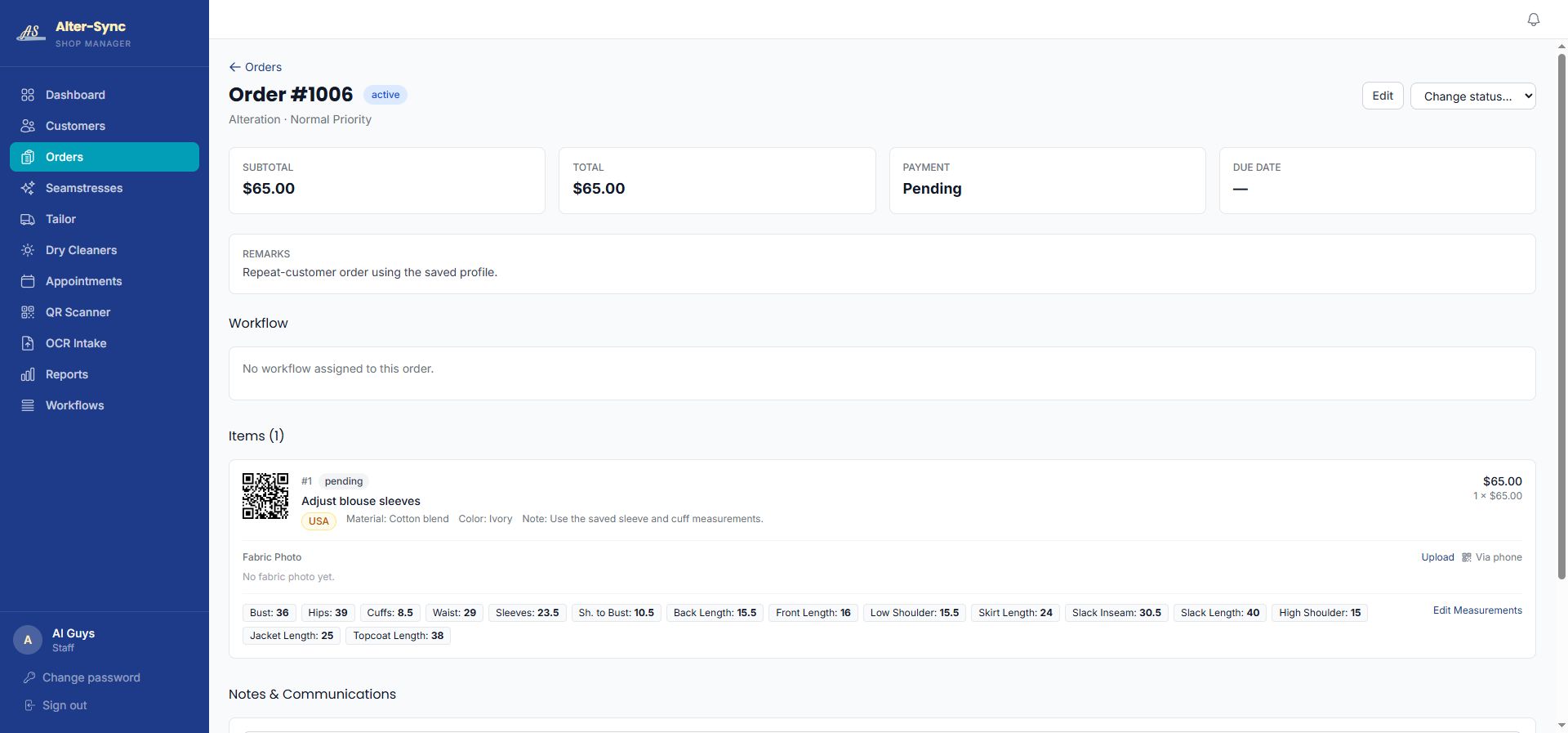
An order in Alter-Sync is the whole story of a garment. Not a line in a ledger with the rest in someone's head.
- Customer, order type, and priority
- Each garment with description, quantity, price, origin, material, and color
- Special instructions and an optional fabric photo
- The measurements the work was cut to
- The current status: draft, active, on hold, completed, or cancelled
Order 1006: a repeat customer's blouse, the instruction to use her saved sleeve and cuff measurements, and the measurements themselves.
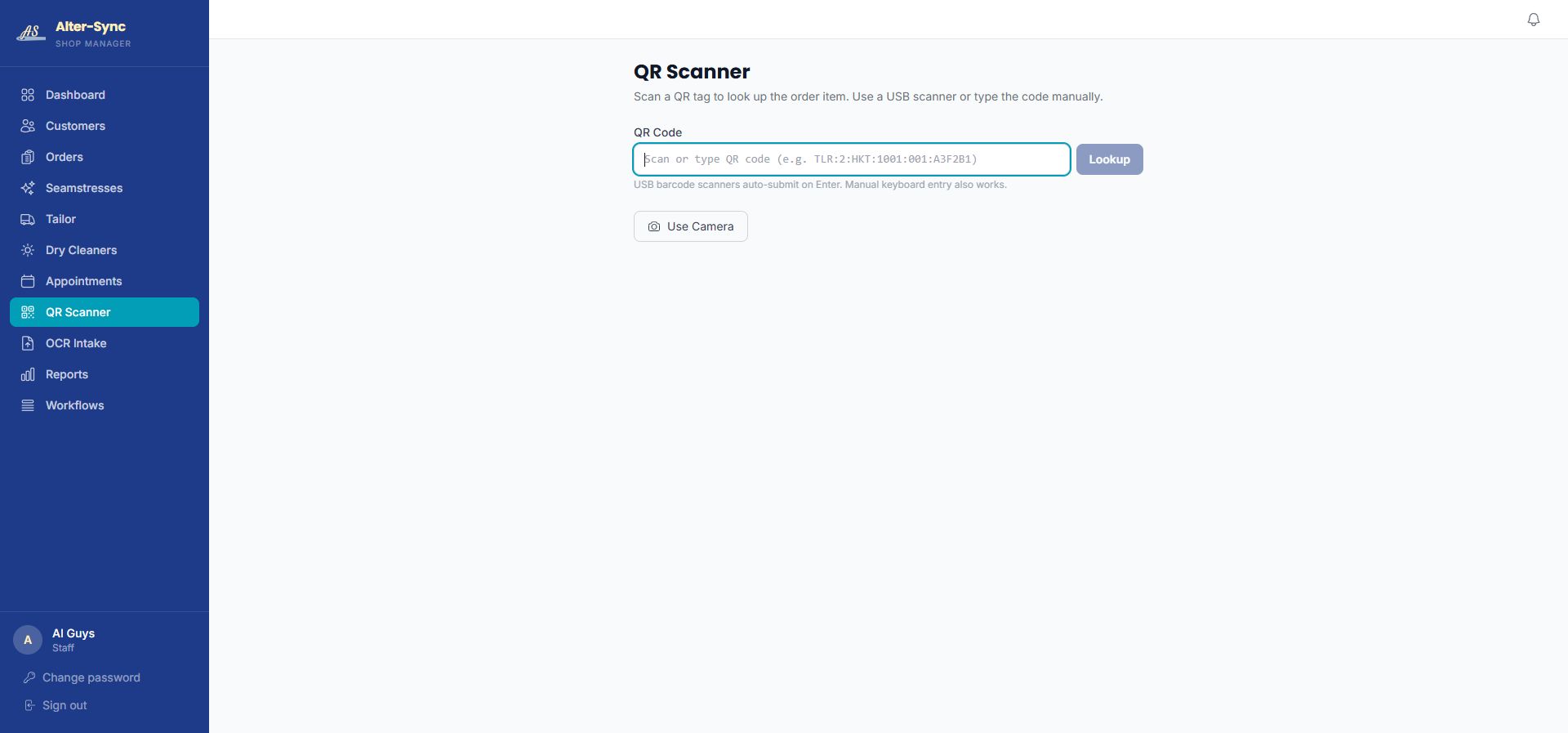
Scan with a phone camera, or type the code printed on the tag. Both open the same record.
A QR code on every item
Pick up the garment. Open its record.
Every order item gets its own QR code the moment it is created. Print it on the tag, tuck it in the pocket, or pin it to the bag. Anyone in the shop with a phone can open the full order without asking who took it in.
A scan shows what the customer asked for, what the measurements are, and where the order stands. Manual lookup works when a camera is inconvenient.
The whole rack at once
Every open order, its status, and its priority.
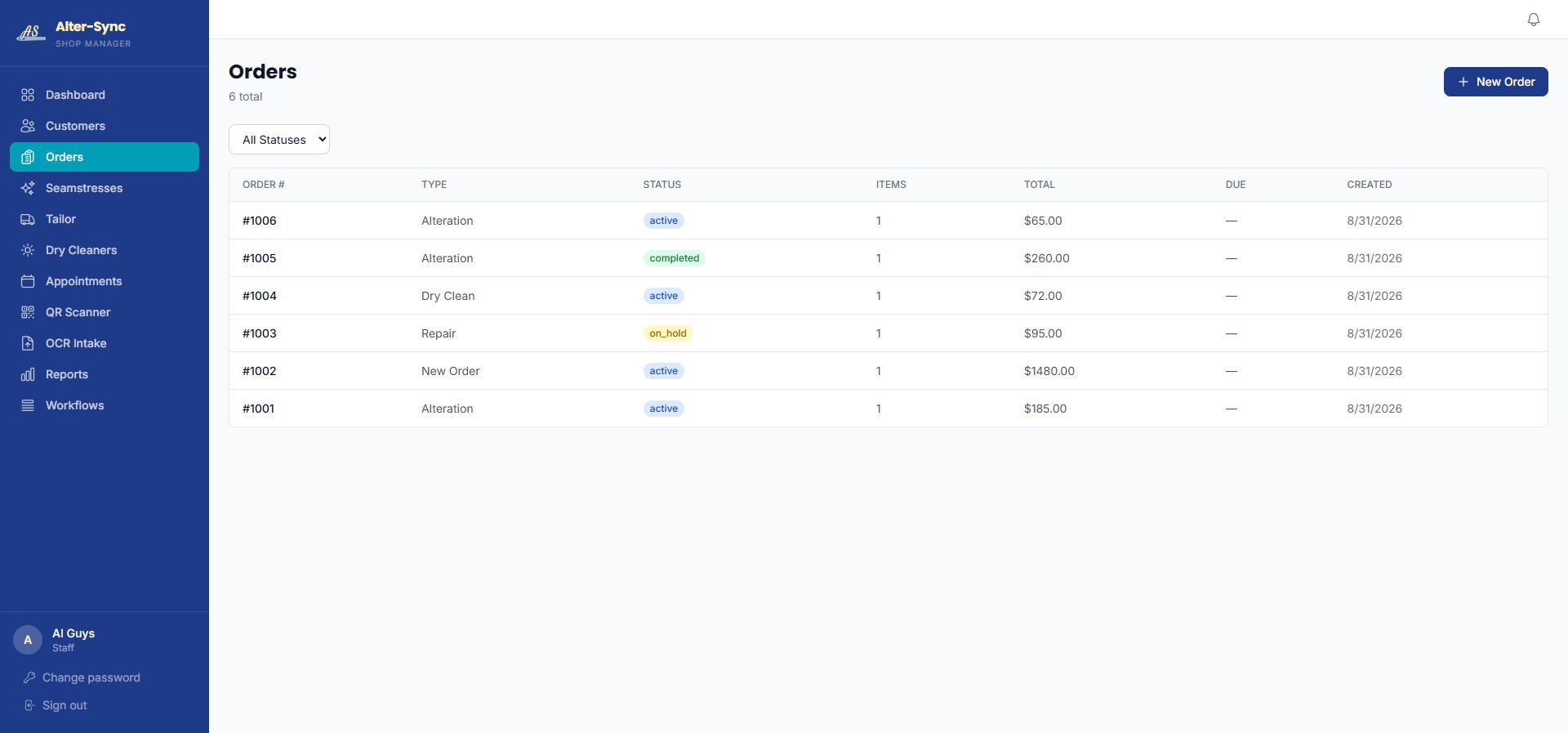
The orders list is the printed spreadsheet you no longer have to print. Alterations, repairs, new garments, and dry cleaning share one table with the customer, the type, the status, the priority, and the total.
Mark a rush job Urgent and it reads that way to everyone. Put a job on hold while the customer decides, and it stops looking like late work.
Six demo orders across alteration, new order, repair, and dry clean, each with its status and priority visible.
Where this matters most
The garment that goes out of sight.
Alteration shops
Garments travel between the counter and a seamstress, sometimes across town. The record travels with them, so "where is Mrs. Johnson's dress?" has an answer without a phone call.
For alteration shopsBespoke tailors
A commission passes through several fittings and often a production partner in another time zone. Instructions and measurements stay attached to the order the whole way.
For bespoke tailorsNext-generation owners
Taking over a shop means inheriting a system that lives in someone's head. The order record is where that knowledge gets written down.
For the next generationQuestions
About garment tracking.
How does garment tracking work in Alter-Sync?
Each order holds the customer, the garment, its material and color, special instructions, a fabric photo if you want one, and the measurements it was cut to. Every order item receives a QR code. Scan it or type it and the record opens, with the current order status.
Can we track alterations, repairs, and new garments in the same place?
Yes. Orders can be New Order, Alteration, Repair, or Dry Clean, each with a Low, Normal, High, or Urgent priority, all in one list.
Does it replace our paper tags?
That is up to you. Many shops keep a tag on the hanger and add the QR code so the tag opens the full record. The point is that the details live in one place instead of on the tag alone.
What statuses can an order have?
Draft, active, on hold, completed, and cancelled. Your shop decides what each one means in practice. The counter-to-pickup stages you plan the day around are yours to define.
A conversation about your shop
See your shop in sync.
Bring your order forms to a thirty-minute walkthrough and see how Alter-Sync fits the process you already trust.
Book a WalkthroughPrefer to talk first? Call (205) 541-0683 or email Darrell.